Every batch of your animal’s feed faces the same challenge: staying as good as the day it was formulated. Feed and water hygiene strategies, combined with proven preservation science, are what make that possible, from raw material to animal.
Feed & Hygiene preservation
Feed safety and hygiene starts long before your animal eats
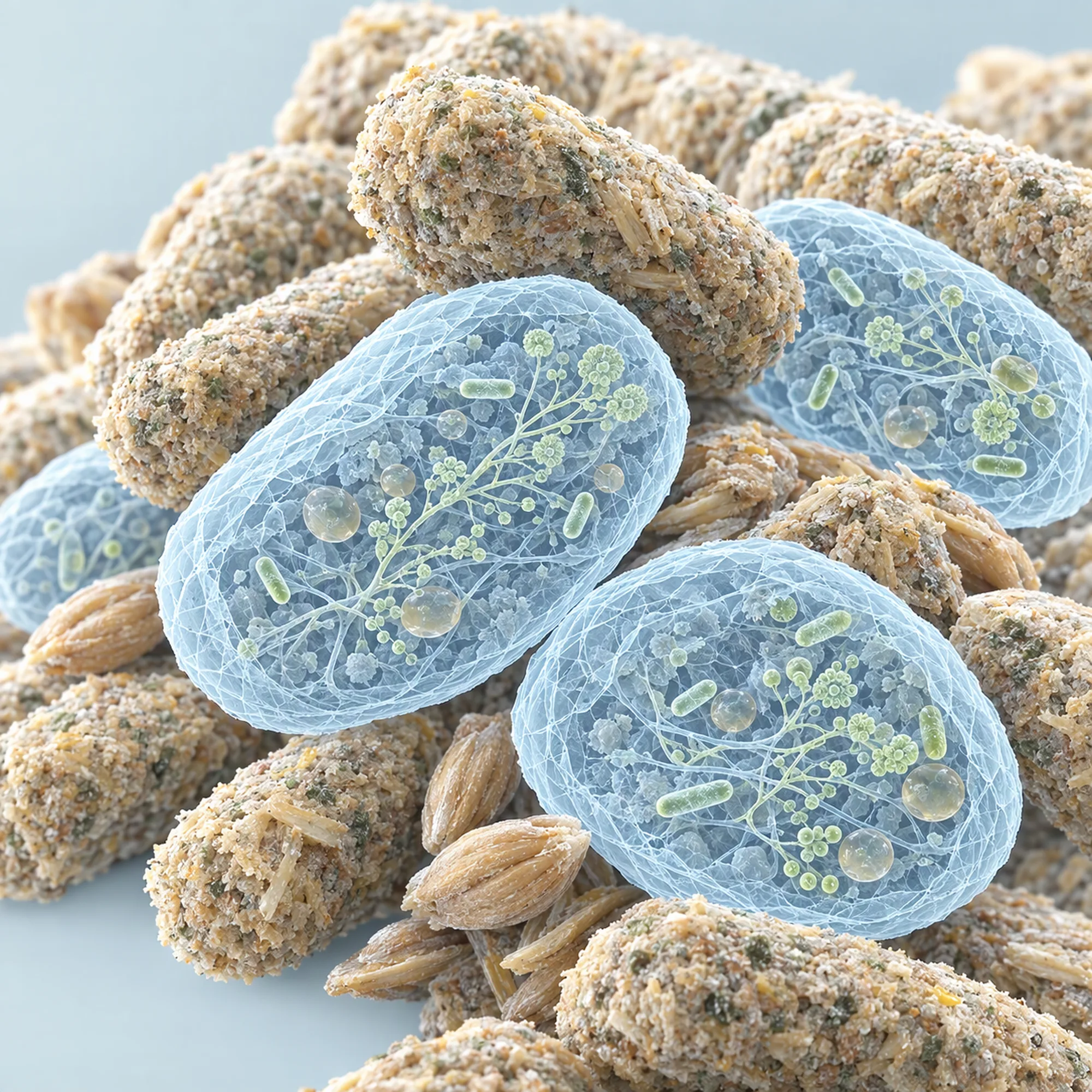
Feed hygiene and preservation: where feed quality is lost, from field to drinker
The conditions around your feed determine how well its quality holds up. Moisture and temperature create opportunities for mold and bacterial growth during storage, while oxidation gradually affects fats and vitamins and reduces nutritional value.
And contamination doesn't stop at the feed bin. Bacteria and biofilm can build up throughout the drinking-water system, from tanks to pipes and waterlines, affecting water intake and gut health. Innovad combines feed preservation and drinking-water hygiene in one approach, so quality holds from the mill all the way to the animal.
Five moments where feed quality is at risk
Step 1 · Field
Mold starts in the crop
Mycotoxins can form before harvest, especially after a wet or warm season.
What helps
Clean raw materials and check them on intake.
Step 2 · Storage
Where quality is lost fastest
Moisture and warmth let mold and bacteria grow. Mycotoxins stay behind even when the mold is gone.
What helps
Preserve raw materials and control moisture.
Step 3 · Mill
Heat and processing
Processing heat speeds up oxidation of fats and vitamins.
What helps
Protect fats and vitamins with antioxidants.
Step 4 · Feeder
Leftover feed spoils
Feed that sits in warm, humid conditions picks up mold and bacteria again.
What helps
Keep feeders clean and feed fresh.
Step 5 · Drinker
Biofilm in the waterline
Bacteria and biofilm build up from tanks to pipes, affecting water intake and gut health.
What helps
Keep waterlines free of biofilm, from tank to drinker.
Risk levels are indicative.
Can your feed look clean and still work against your animals?

When mold grows in storage
Moisture and temperature let mold develop in stored feed and raw materials. Mycotoxins can remain even when the mold itself is no longer obvious, adding an animal-health risk.
When bacteria take hold in feed and water
Microbial activity contributes to spoilage and nutrient loss, and pathogens can reach animals through feed, drinkers and waterlines.
When fats and vitamins slowly degrade
Oxidation affects sensitive components such as fats and vitamins, gradually reducing the energy and nutritional value your animals actually receive.
Quality you can verify, batch after batch
Feed hygiene shouldn't rely on how feed looks or smells. Mold, bacteria and oxidation often do their damage long before anything is visible. That's why we measure quality at every step, from raw material to drinker, and follow how well it holds over time.
Mold & bacterial counts. Regular checks of raw materials and finished feed show when storage conditions start working against you.
Oxidation markers. Peroxide and rancidity checks show whether fats and vitamins still deliver the energy and nutrients you formulated.
Water-line checks. Bacterial counts and biofilm checks from tank to drinker show whether water stays clean all the way to the animal.
Start with your species. Understand the challenge. Find the solution.