Feed is usually the biggest single cost on a fish or shrimp farm, and it's often where trouble starts. A batch with mycotoxins or oxidized oil looks fine at the feeding station. You only notice weeks later, when growth flattens out and survival slips. We work with feed mills and farms to catch it earlier.
Aqua
Aquaculture health solutions for healthier fish and shrimp
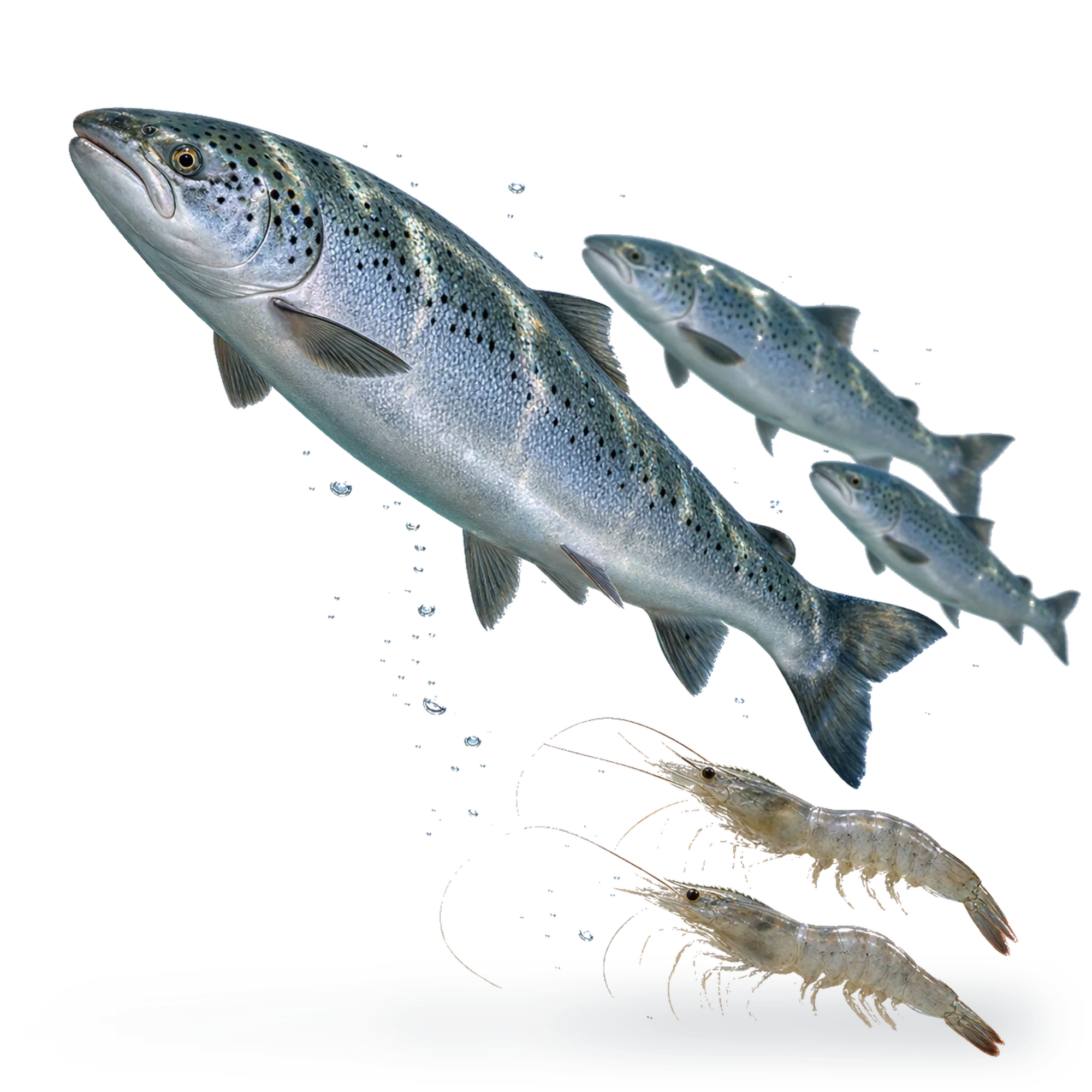
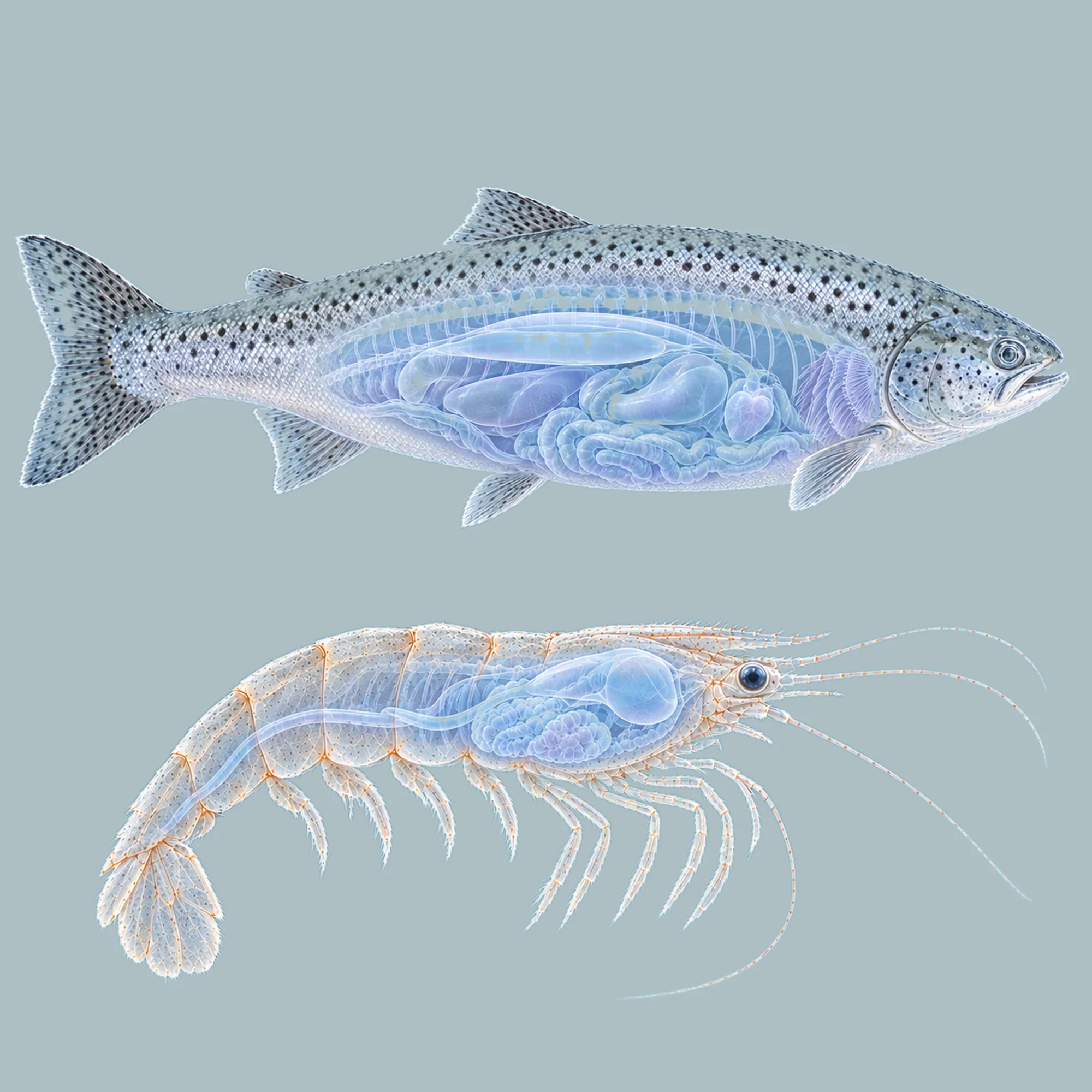
- Gut Fish and shrimp are sensitive to some mycotoxins, even at low levels
- Liver Better fat digestion supports the liver and turns feed energy into growth
- Fillet Unprotected salmonid feed lost ~50% of its astaxanthin in pilot extrusion tests
- Hepatopancreas The shrimp's digestive gland, key to fat digestion and energy
Mycotoxins and oxidation in aquafeed
Replace fishmeal with soy, maize or wheat and the feed gets cheaper. It can also pick up mycotoxins along the way. Fish and shrimp are sensitive to some of them even at low levels, and the damage is easy to miss: the animals simply grow a little slower and convert feed a little worse.
Oil is the other weak spot. Salmon and shrimp feeds are rich in fat and carry astaxanthin, and both start to oxidise in the extruder and keep going in storage. In pilot extrusion tests, an unprotected salmonid feed lost around half of its astaxanthin before it ever reached a fish.
Look after the pellet, and you've already done a lot for the animal that eats it.
Key risk points in aquaculture production
Nothing in aquaculture goes wrong in just one place. Some risks start at the mill, others in the pond or the pen. Here's where to look.
-
Feed mill
Selecting raw materials
Plant proteins keep the formula affordable, but they're also where most mycotoxins come in. Testing raw materials on arrival is cheaper than finding the problem on the farm.Related challenges -
Extrusion & storage
Protecting fats and astaxanthin
High temperatures and months in a warehouse are hard on oil and pigment. What leaves the mill isn't always what the fish or shrimp end up eating.Related challenges -
Hatchery & nursery
Postlarvae, fry and juveniles
Small animals have the least margin. At this stage we usually advise a toxin binder with added immune support, rather than a binder on its own.Related challenges -
Grow-out
Turning feed into growth
Most of the feed bill is spent here. Fish and shrimp that digest fat well grow faster on the same ration. Pellets they ignore sink to the bottom and foul the water.Related challenges -
Handling & water changes
Stress events
Grading day, a transfer to sea, a sudden drop in water temperature. Each one sets the animals back for a while and leaves them more open to disease.Related challenges
Aquaculture solutions for feed producers and farms
Six solutions we offer for aquaculture. Some do their work at the mill, protecting the pellet. Others work inside the animal, once it has eaten.
Common questions about fish and shrimp feed
How do mycotoxins affect fish and shrimp?
Mostly by slowing them down. Mycotoxins cut growth and feed efficiency, make animals less able to cope with stress, and can lower survival. Plant-based aquafeeds carry more of them, and fish and shrimp react to some even at low levels. Testing raw materials and finished feed is the place to start.
Why does astaxanthin get lost in fish feed?
Mainly through oxidation during extrusion, drying and storage. Astaxanthin reacts easily with free radicals, so when the feed oxidizes, it is used up as an antioxidant instead of coloring the fillet. In pilot extrusion tests, feed without added antioxidant lost around 50% of its astaxanthin. Protecting both the dry mix and the fat coating keeps more of it working as a pigment.
Are there natural alternatives to ethoxyquin and BHT in aquafeed?
Yes. Plant-based antioxidants can take over part of the work of synthetic antioxidants such as ethoxyquin and BHT/BHA, which face growing restrictions worldwide. Innovad's olive-based antioxidant contains more than 40 bioactive molecules, including hydroxytyrosol, tyrosol, maslinic acid and squalene, and is combined with liquid antioxidants in the fat coating. The right program depends on fat content, required shelf life and processing losses.
How can I check my aquafeed for mycotoxins?
Start with the feed. Blood analysis is not yet feasible in aquatic species, so monitoring combines raw material and feed analysis with growth, feed conversion and survival data. Innovad's Myco-Marker™ feed analysis screens for 16 mycotoxins.
How can fish and shrimp farms rely less on antibiotics?
By preventing problems rather than treating them. Sick fish often don't eat enough to take in a full dose of medicated feed, and antibiotic use is increasingly restricted. Feed additives that support growth, feed efficiency, stress tolerance and gut health help reduce the need for medication.