Pig production succeeds or fails at a few critical points: a sow that stays fertile and milks well, piglets that come through weaning without a setback, and growers that keep eating when feed or weather turns against them. We help you see those points coming, and prepare your herd for them.
Swine
Swine health solutions, from sow to finisher
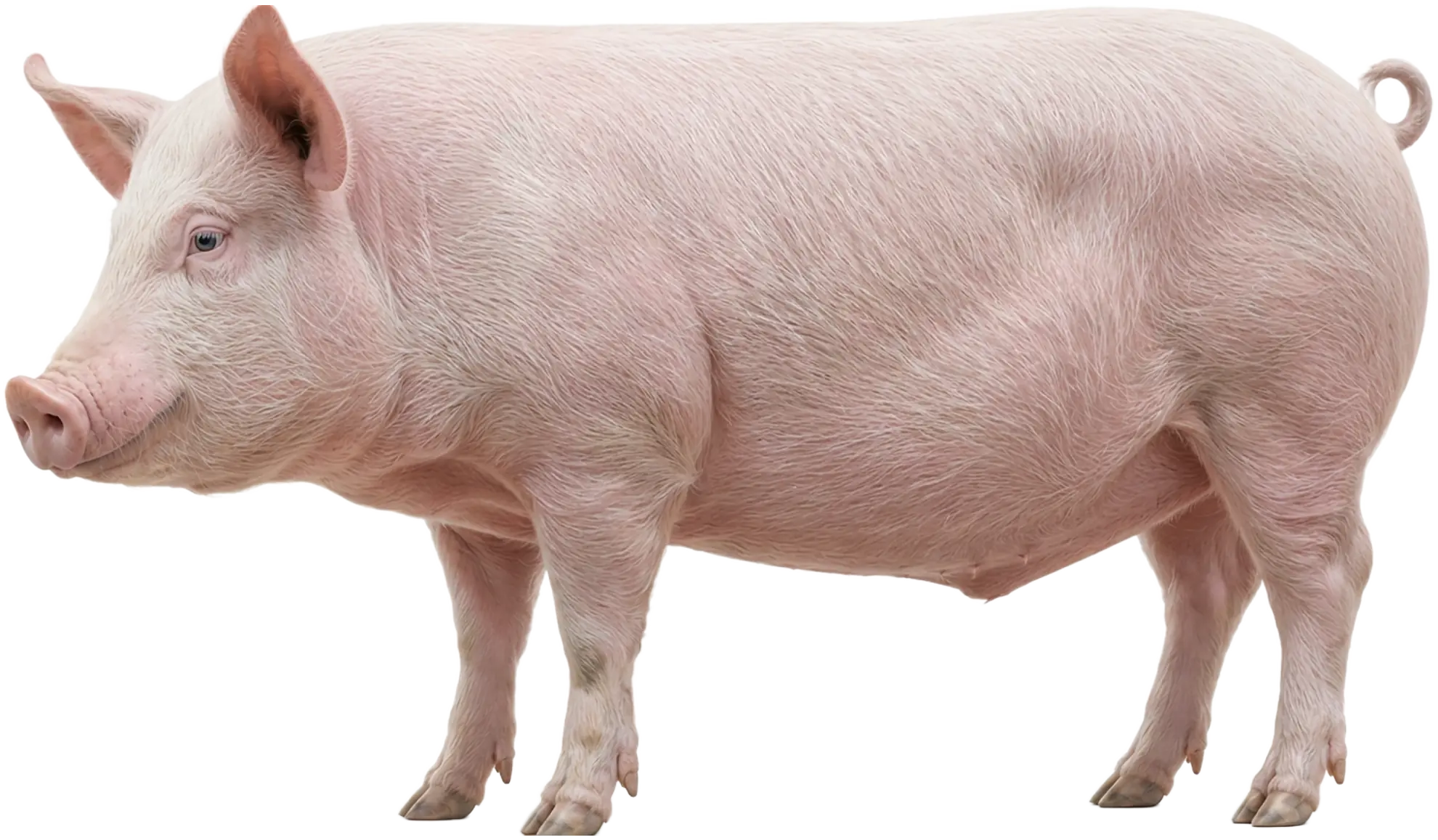
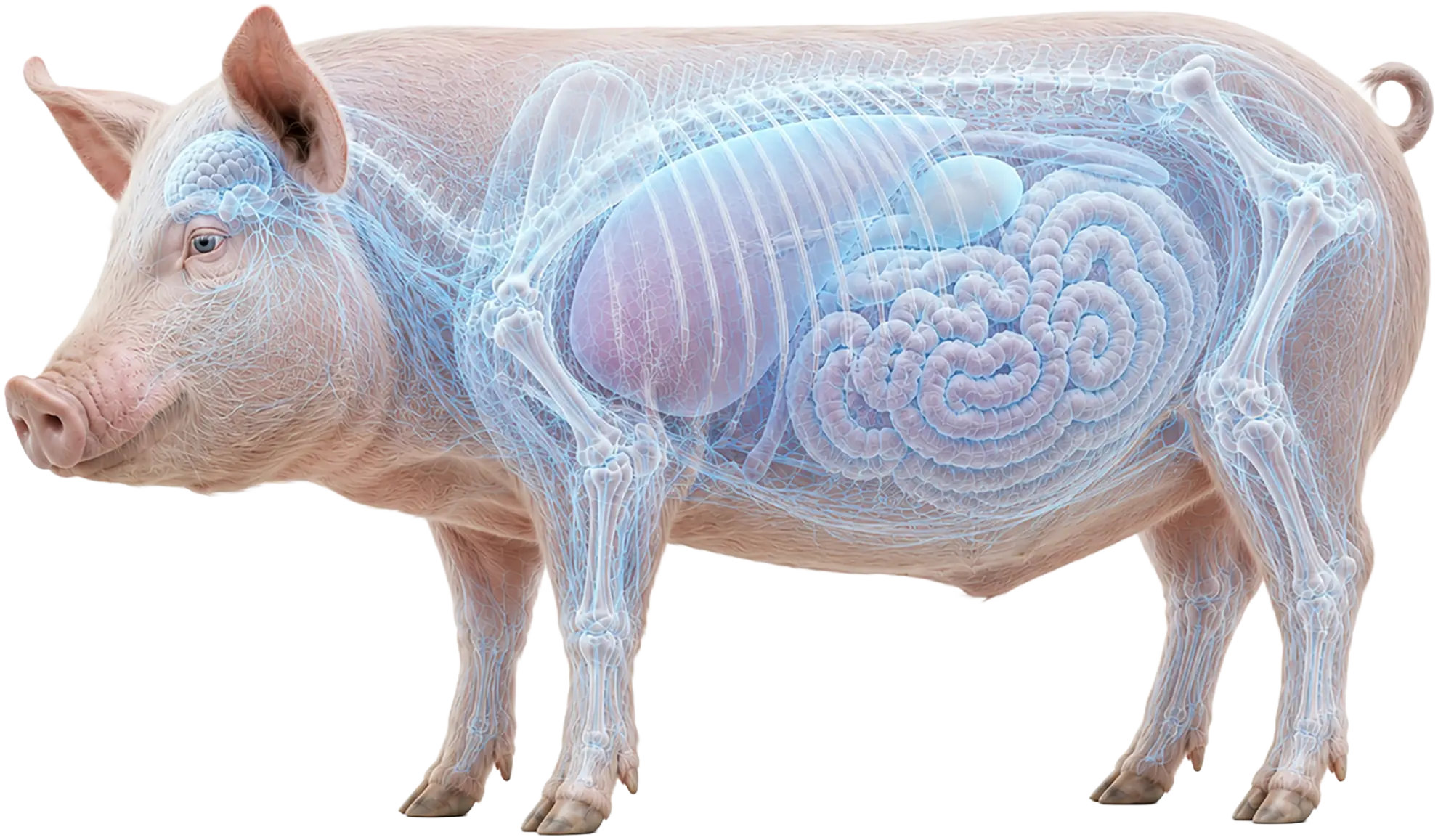
- Gut 50–100% of DON is absorbed in pigs, vs 21% in poultry
- Placenta Toxins found in newborn piglets before their first feed
- Milk Toxin transfer is higher in sows than in ruminants
- Piglet DON stays in the blood for weeks; adults clear it within 48 h
The sow's diet becomes the piglet's diet
On most farms, the health conversation starts at the feed bin. In pigs, it often starts a generation earlier.
What the sow absorbs can cross the placenta and pass into her milk, so piglets carry toxins before they eat a single gram of feed. Pigs also absorb far more DON than poultry do, and young piglets can't clear it the way an adult can.
That's why we look at the sow and her litter together, and at what your pigs have actually absorbed, not only at what's in the feed.
Source: Innovad Pig Health & Nutrition Masterclass 2026 (Biomonitoring+); Sayyari et al. and Štěpánová et al., Toxins; Schelstraete 2020; Devreese 2014.
From gestation to finishing: where the pressure points are
Each step of the production cycle brings its own risk. Follow your pigs through it, and go deeper into the challenges that matter at every stage.
-
Gestation
Before birth
What the sow eats, her litter feels. Toxins and gaps in vitamin D and mineral supply affect fertility, farrowing and the piglets she is carrying.Related challenges -
Day 0–1
Farrowing and colostrum
A smooth farrowing gives vital piglets. Those that take in less than 200 g of colostrum in their first day have a much lower chance of reaching weaning.Related challenges -
Week 3–5
Weaning
Separation, new pen mates and the switch to solid feed, right in the immunity gap, and now without pharmaceutical zinc oxide.Related challenges -
Nursery & growing
Keeping intake up
Every lost meal is growth you won't get back. Feed changes, off-flavours and DON can all push intake down.Related challenges -
Finishing
Heat and hidden losses
Pigs can't sweat effectively. From 26°C at high humidity they eat less, and performance slips while the herd still looks fine.Related challenges
Science-based support for every stage of your herd
Your questions about pig health, answered
What are the biggest health challenges in pig production?
The biggest challenges cluster around a few moments: mycotoxins in feed, gut health at weaning, heat and other stress peaks, and the hours and days after birth and weaning, when pigs need support faster than a feed change allows. Sows, piglets and growers each feel these pressures differently, so the approach changes with the stage.
Why are pigs more sensitive to mycotoxins than other livestock?
Pigs are the most sensitive farm species to mycotoxins such as DON and zearalenone. DON quickly reduces feed intake and damages the gut, ZEN disrupts reproduction, especially in gilts, and toxins in the sow can reach her piglets during gestation and through milk. In Innovad's 2024 feed survey, 9.1% of swine samples exceeded EU limits.
How does weaning affect piglet gut health?
Most piglets are weaned at three to five weeks, right in the immunity gap: maternal protection is fading while their own immune system is still developing. The switch to a solid, starch-based diet arrives at the same time, so the first two weeks after weaning carry the highest risk of diarrhoea.
Why does colostrum matter so much for piglets?
Piglets are born with very low energy reserves and an immature immune system, because the sow's placenta does not pass antibodies to them before birth. Colostrum delivers both energy and antibodies, but piglets can only absorb those antibodies in the first hours of life. Piglets that take in less than 200 g of colostrum in their first 24 hours have a significantly lower chance of surviving to weaning.
How can I check if my pigs are exposed to mycotoxins?
The most direct way is a blood test. Biomonitoring+ uses a drop of blood on an FTA card to measure up to 36 mycotoxins your pigs have actually absorbed, which shows exposure that a feed analysis can miss.