Most health problems in cattle build up slowly, long before you see them in the milk tank or on the scales. We help you recognise the early signals and respond in time, with support you can give through the feed or the drinking water.
Ruminant
Ruminant health and nutrition solutions
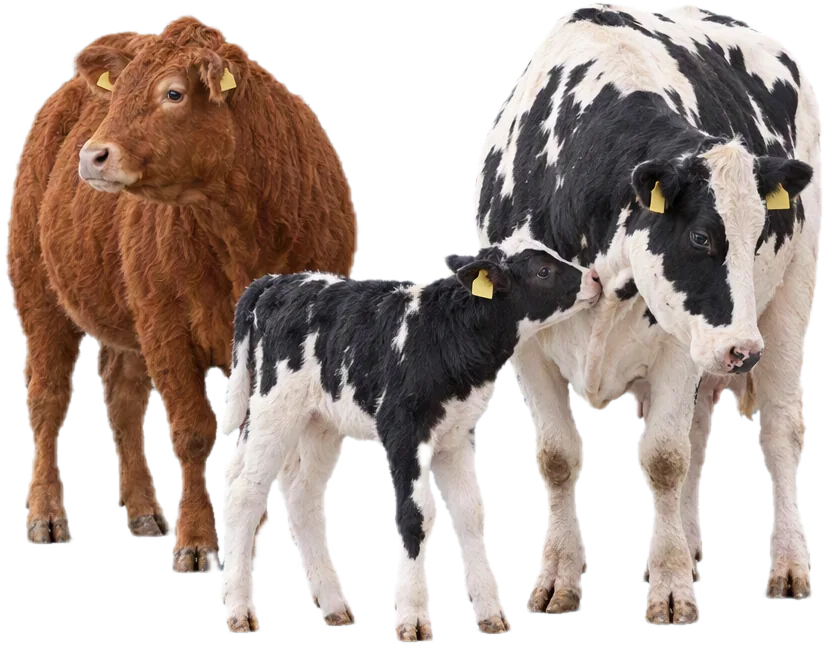
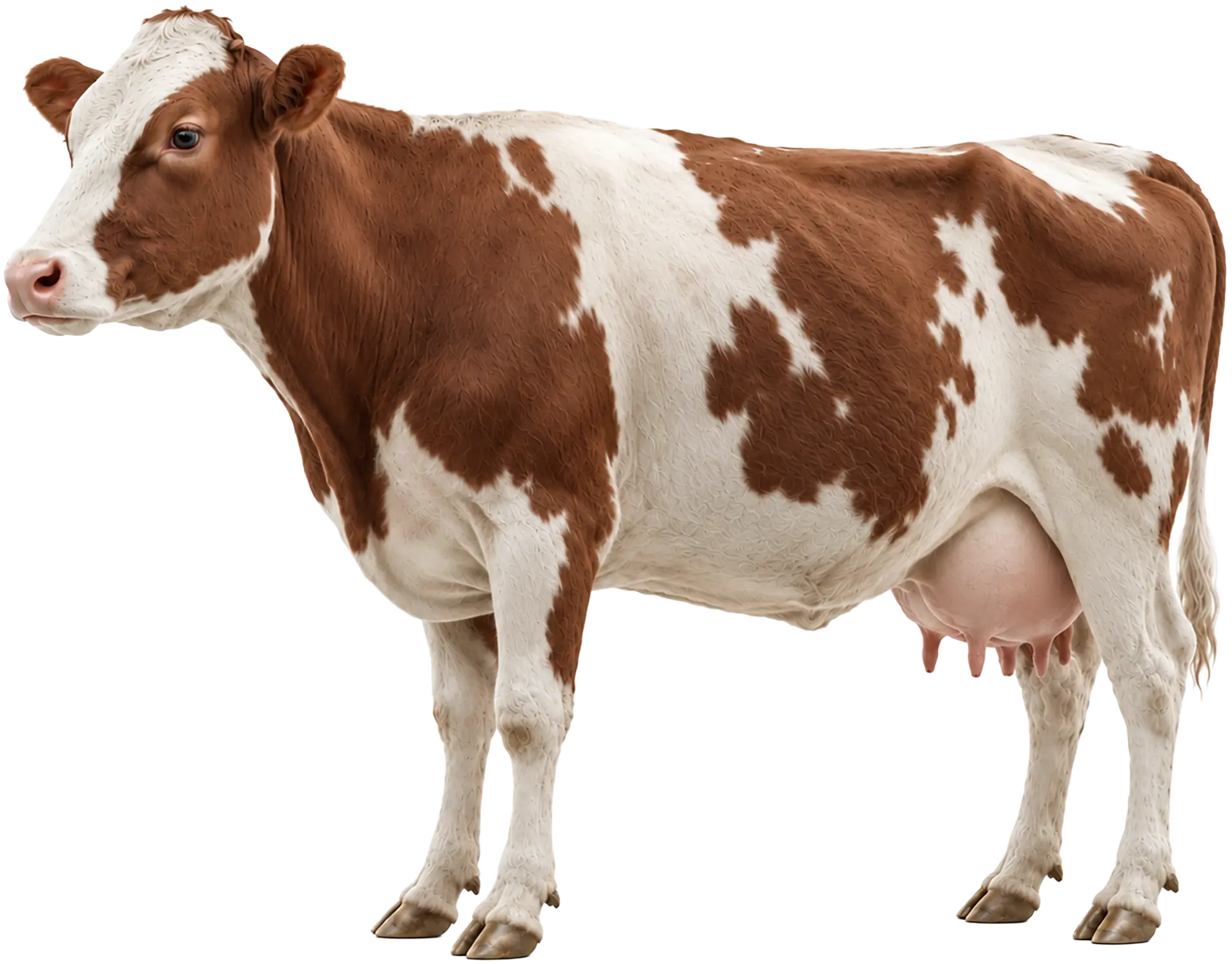
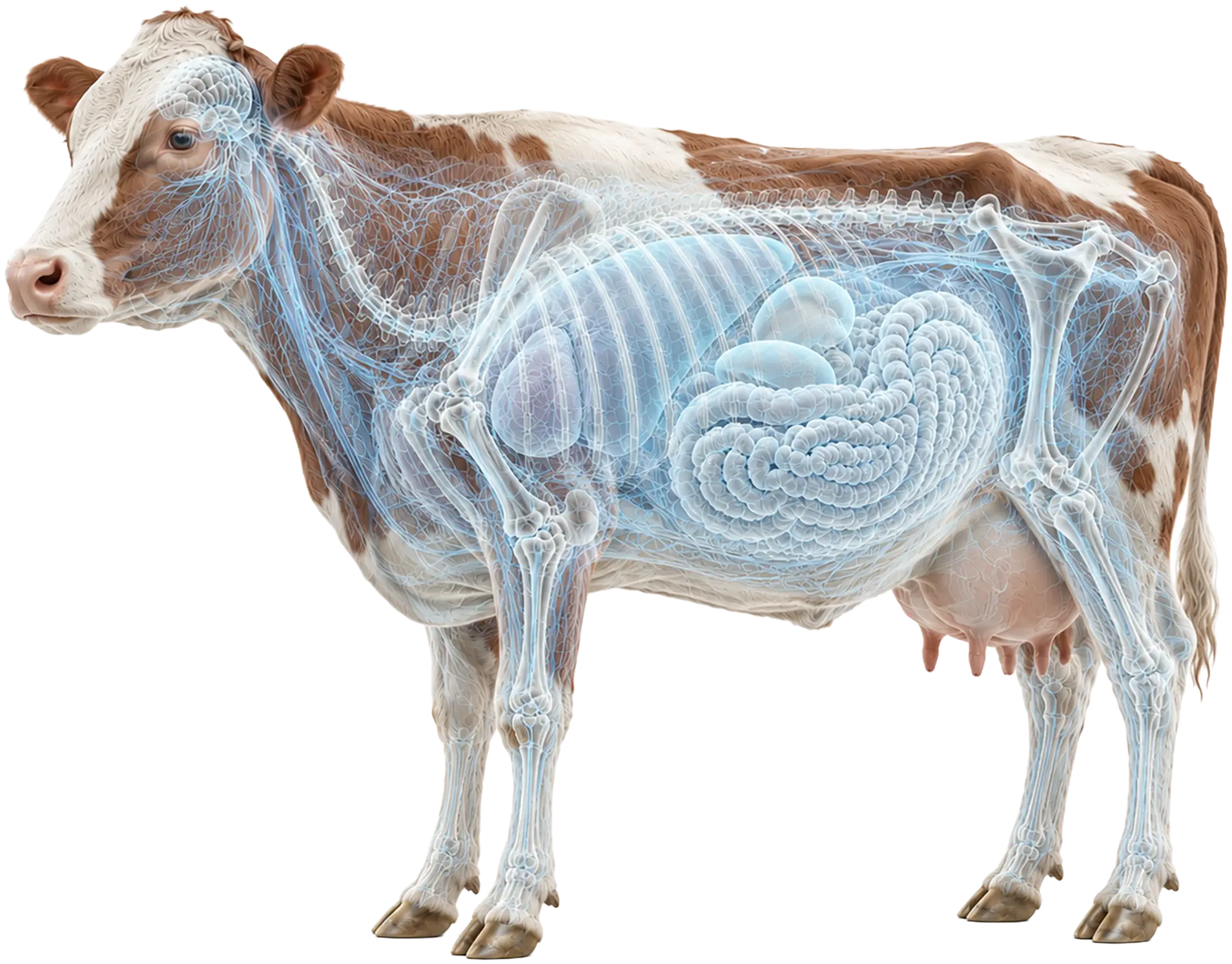
- Gut DON can damage the gut lining before the rumen breaks it down
- Liver Mycotoxins can weaken liver function and immune status
- Fertility Low aflatoxin levels are linked to more abortions and longer calving intervals
- Udder Aflatoxin transfer to milk rises from ~0.6% at 15 L to ~6% at 50 L/day
How mycotoxins affect dairy and beef cattle
The rumen breaks down part of the mycotoxins your cattle eat, but not all of them. Some pass through unchanged, and zearalenone is even converted into a more potent form.
Once absorbed, mycotoxins travel through the bloodstream to organs such as the liver and the reproductive tract. In dairy cows, aflatoxin can also pass into the milk, and the higher the yield, the more of it reaches the tank.
That is why we look at what your cattle have actually absorbed, not only at what is in the feed.
Critical periods in cattle health, from birth to lactation
Some periods in a cow's life carry far more risk than others. Knowing when they come lets you prepare instead of react.
-
Birth – week 3
Newborn calves
A calf is born with an immune system that is only partly developed, so it depends on colostrum and a clean environment. Mycotoxins can already be present in its blood at birth.Related challenges -
Week 3 – weaning
Milk feeding and weaning
Digestive problems are common between birth and weaning. Each change in milk feeding puts pressure on a gut that is still maturing, and the switch to solid feed is the biggest step of all.Related challenges -
Rearing & fattening
Growth on forage and concentrates
From here, the ration drives growth. Silage and grain can carry mould and mycotoxins, and in our 2024 survey about one in three ruminant feed samples exceeded EU limits.Related challenges -
Calving & early lactation
The transition period
Around calving, a cow needs more energy and protein than she can eat. In high-yielding cows, methionine and lysine are often the first amino acids to fall short.Related challenges -
Summer
Heat stress
The rumen produces heat of its own, so cattle feel a warm day early. To cool down they eat less, which costs milk and can lower fertility.Related challenges

Innovad solutions for ruminant health
Explore the solutions we offer for calves, beef cattle and dairy cows. Each one links to its own page with more detail.
Frequently asked questions about ruminant health
What are the main health challenges in dairy and beef cattle?
Most of the pressure comes early in life and around calving. Young calves have to cope with scours while their immune system is still developing. Dairy cows face the strain of calving and early lactation, often combined with summer heat. In all cattle, mycotoxins from forage and grain can affect fertility and milk.
Doesn't the rumen protect cattle from mycotoxins?
Only partly. The rumen breaks down some mycotoxins, but not all. Some pass through unchanged and zearalenone is turned into a more potent form. In Innovad's 2024 feed survey, about one in three ruminant samples exceeded EU limits, mostly because of DON.
How does aflatoxin get into milk?
A cow converts part of the aflatoxin B1 she eats into aflatoxin M1, which ends up in her milk. The higher her yield, the more passes over: from around 0.6% at 15 L/day to around 6% at 50 L/day. So your highest-producing cows carry the greatest risk. The EU limit for AFM1 in milk is 50 ppt.
Why are dairy cows so sensitive to heat stress?
Because they carry their own heater. Fermentation in the rumen generates heat on top of the warmth of the day, and high-yielding cows produce even more. To cool down, they eat less, which leaves less energy for milk.
How can I find out what my herd is exposed to?
Test the animal as well as the feed. A feed analysis shows one sample. A blood test with Biomonitoring+ shows what your cattle have absorbed from everything they eat, so you can target your approach and check whether it works.